
Articles

BLUEBERRIES OR BUST by Elisabeth Ginsburg

BLUEBERRIES OR BUST

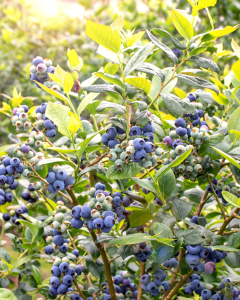
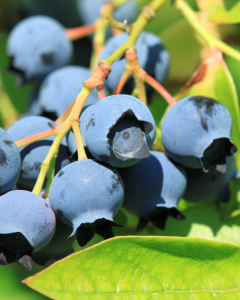
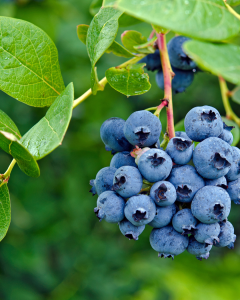
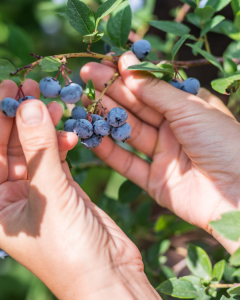
Blueberries have so many virtues. The North American native shrubs are attractive enough to stand on their own as garden ornamentals. The sweet fruits are tasty eaten out of hand and amenable to culinary applications from appetizers to shortcakes. And while you are eating those beautiful blue fruits, you are also getting helpful amounts of vitamins C and K, as well as antioxidants. What’s not to love? What’s not to grow? The only hard part is choosing the blueberry type and variety, and that may depend at least partly on where you live. Armed with a little knowledge, you can be singing the blues (berries) as early as this summer.

Northern Blues

If you live in USDA zones 3-7, you can choose from varieties of Northern Highbush blueberries (Vaccinium corymbosum), shrubs that grow high, wide and handsome, reaching five to nine feet tall, with some newer varieties remaining more compact. The shrubs produce large, sweet berries. Popular varieties include ‘Earliblue’, which, true to its name, fruits in June ahead of the July peak production season. Dating back to 1916, the ‘Jersey’ blueberry bears fruit later—generally in late July or August.

Southern Sweetness

Southerners can opt for either the hybrid Southern Highbush (Vaccinium corymbosum x Vaccinium darrowii) or the aptly named Rabbiteye (Vaccinium ashei). Hardy in USDA plant hardiness zones 5-10 and needing relatively few hours of cold winter weather to set fruit, Southern Highbush blueberries may grow between six and eight feet tall. Breeding programs have produced many varieties, some of which are better for the commercial market, while others

thrive in home garden settings. ‘Jewel’ produces large fruit in the middle of the summer blueberry season, while ‘Magnus’ is an early fruiting variety with large berries.

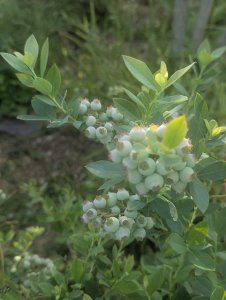
Rabbiteye blueberries are large at six to 15 feet, with a spreading habit. Native to the American southeast, they are the most heat and drought tolerant of all the blueberries The evocative name comes from the pinky color of the unripe berries, which inspired comparisons to the eyes of albino rabbits. Varieties include ‘Climax’, with early-ripening, large fruits and ‘Titan’, known for producing large fruit at mid-season.

Wild and Tasty

Lowbush blueberries (Vaccinium angustifolium) creep along the ground in their native areas of the northern United States and Canada (USDA zones 2-6). These are the true “wild” blueberries—with small, extremely sweet fruit. Breeders crossed the cold tolerant lowbush blueberry with the northern highbush type to produce the Half-High blueberry bush, which thrives in USDA zones 3-7. These hybrids feature larger berries than the lowbush types and excellent cold tolerance. Look for plants with northerly names like ‘Polaris’ and ‘Northland’.

Ornamental Edibles

Blueberries are delicious and worth growing even if you never really look at the plants. However, the shrubs have considerable ornamental value. Starting in spring, the bushes bear the pinkish-white, bell-shaped flowers that are characteristic of other plants in the Ericaceae family, like pieris and heathers. After commanding the full attention of early spring pollinators, the flowers give way to the developing fruits. By fall, the leaves turn a brilliant red, making the shrubs stand out among other stars of the autumn garden. Because blueberries offer three seasons of interest, some gardeners even use them en masse as flowering/fruiting hedges.

Good Things in Small Packages

Plant breeders are very attuned to the needs of small-space gardeners, whether those spaces are patios, driveways, or containers. If you fit that category, you too can have your fill of the blue fruits.

At 24 inches tall and 20 inches wide, little ‘Top Hat’ is a cross between the Northern Highbush blueberry and the lowbush blueberry. With a mounding habit, it is perfect for a medium to large container and will produce large fruits. Another intriguing small hybrid variety is ‘Pink Lemonade’, which has rosy pink fruits with exceptionally an exceptionally sweet blueberry taste. It is hardy in USDA Zones 4-8 and can grow up to four feet tall, perfect for a large container.

Get Growing

Blueberries overall are undemanding plants but prefer well-drained soil on the acid side of the pH scale. For good soil chemistry, amend the planting soil with an organic product like Fafard® Premium Natural and Organic Compost. Most types are self-fertile, meaning that the shrubs will produce fruit without another compatible blueberry bush nearby. However, to increase fruiting, buy a second, compatible blueberry. Rabbit eye varieties are the exception to the self-fertile rule and will not set fruit without a companion plant. If you plan to purchase one, make sure to check with the vendor about which compatible varieties are available.

Regular moisture is a must, especially when young shrubs are establishing their root systems, and sunshine is essential.

Get a Net

One last thing to consider…If you want to enjoy the fruits of your labors, consider investing in some fine mesh netting to cover your blueberries when the fruit begins to ripen. In my garden the birds eyeball the blueberry bush from the time it begins to flower, waiting impatiently for the fruit. Without netting they would eat it all.

Of course, attracting birds to the garden is a distinct benefit even if they devour every last blue morsel. In that situation, it pays to remember that a blueberry bush is worth having for its ornamental value alone.

About Elisabeth Ginsburg

Born into a gardening family, Elisabeth Ginsburg grew her first plants as a young child. Her hands-on experiences range from container gardening on a Missouri balcony to mixed borders in the New Jersey suburbs and vacation gardening in Central New York State. She has studied horticulture at the New York Botanical Garden and elsewhere and has also written about gardens, landscape history and ecology for years in traditional and online publications including The New York Times Sunday “Cuttings” column, the Times Regional Weeklies, Horticulture, Garden Design, Flower & Garden, The Christian Science Monitor and many others. Her “Gardener’s Apprentice” weekly column appears in papers belonging to the Worrall chain of suburban northern and central New Jersey weekly newspapers and online at http://www.gardenersapprentice.com. She and her feline “garden supervisors” live in northern New Jersey.

Golden Leaves to Lighten Dark Places by Elisabeth Ginsburg

Golden Leaves to Lighten Dark Places

The mythic King Midas had the ability to turn everything he touched to gold.  He came to regret  that unique ability, but shade gardeners can understand the value of gold in borders and containers.  Gold-leafed plants lighten dark corners, creating life and interest, and lifting spirits.  Fortunately, shrubs, perennials, annuals, and grasses with gold or golden green leaves are readily available.  Some come by their golden good lucks naturally, others are specially bred forms of garden stalwarts.  Either way, golden garden plants are a good investment.

Bleeding Hearts of Gold

Perennials, with their ability to return year after year are great assets in the garden.  Golden leaves abound.

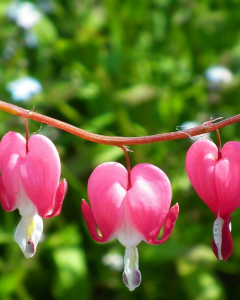
Start things off right in spring with ‘Golden Heart’ bleeding heart (Dicentra spectabilis ‘Gold Heart aka Lamprocapnos spectabilis ‘Golden Heart’), a golden-leafed  version of traditional bleeding heart.  The pink and white hearts on arching stems are familiar, but the leaf color is a revelation.  The closely related ‘White Gold’ bleeding heart features similar leaves but bears pristine white “hearts”.

Bleeding heart plants are ephemeral, and the leaves and stems die back in summer, but they shine as the world breaks into bloom in March and April.

Golden Coral Bells

Coral bells (Heuchera) are grown primarily for foliage, though they also bear tall wands of dainty late spring flowers.  ‘Lemon Supreme’ looks like a sunburst, with ruffled, lobed leaves in sunny yellow.  For something with a little drama and a lot of brightness, try ‘Red Lightening’, with chartreuse leaves and red veins.  Both make compact clumps and like supplemental moisture, especially during hot summers.

Sunny Spiderworts

Tradescantia or spiderwort is a longtime garden stalwart descended from the native Tradescantia virginiana.  Compact and perfect for containers, ‘Sunshine Charm’ was bred at the famed Terra Nova Nurseries.  The long, strap-like leaves are golden green, accenting three-petaled lavender-pink flowers that appear in the spring.  Its relative, Tradescantia ‘Sweet Kate’, grows about 20 inches tall, and offers chartreuse leaves paired with darker blue flowers.  Both will develop into healthy clumps with only minimal care.

Golden Ground

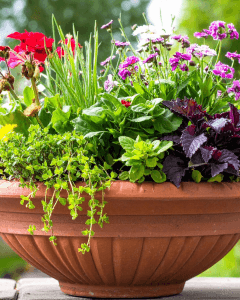
Creeping Jenny or gold moneywort (Lysimachia nummularia) is another longtime favorite that holds its own as a groundcover in part shade. True to its name, the ‘Aurea’ variety covers the earth with golden leaves and produces equally lovely golden flowers. Growing only about two inches tall, the tough little plants form a carpet, blooming in July. Creeping jenny is great choice for hard-to-reach places, because once established it spreads and takes care of itself. Provide the plants with consistent moisture, especially when they are getting established, and creeping jenny will furnish you with brightness and toughness all in one small package. Being petite and amenable, the plants also work in containers, if they are watered regularly.

Lotsa Hostas

Hostas or plantain lilies are also great as either shade-loving specimen plants or grouped to flank walkways.  They make excellent ground covers as well.  The garden centers are chock full of hosta varieties in all shapes, sizes and leaf configurations, but among the best gold and chartreuse-leafed varieties, ‘Fire Island’, with golden leaves that age to chartreuse over the course of the growing season and red-speckled stems is one of the best.  Relatively small at 10 to 14 inches tall, ‘Fire Island’ would also light up container arrays. ‘Maui Buttercups’ is another small cultivar with golden leaves and light purple flowers.  For a little something flashy, try ‘Siberian Tiger’, which is striped in bold yellow and green.  It is a hosta that will not only lighten dark spaces but stop garden visitors in their tracks.

Splendor in the Grass

Grass fanciers with shady space can take heart and plant with confidence if they invest in grasses like Carex ‘Bowles Golden’.  This evergreen sedge grows about 36 inches tall and wide, forming a rounded clump adorned with long golden leaves.   In moisture-retentive soil, happy clumps will slowly increase in size over the years.

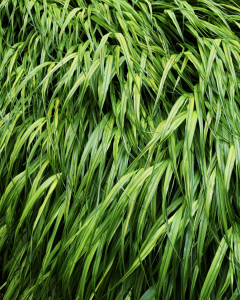
Hakonechloa or Japanese forest grass (Hakonechloa macra) has become very popular in the last decade or so for its sturdiness and well-mannered good looks.  ‘All Gold’ is a gilded version of this grass that looks like miniature bamboo with yellow leaves and a clumping habit.  Like ‘Bowles Golden’, it is happiest in moisture-retentive soil.  Mature plants top out at 18 inches tall and wide and will be ignored by deer and other garden pests.

Golden Shrubs

Oak leaf hydrangea (Hydrangea quercifolia) is a native shrub that has long proven itself to be a reliable garden performer.  ‘Little Honey’ boasts the typical oak-type lobed leaves in golden green, which set off the white, conical flowers in the last spring and early summer.  Growing about three feet tall and wide, ‘Little Honey’ works well in containers and small gardens.  The flowers fade to dusty pink and then beige, while the leaves turn a brilliant red in autumn, adding another season of interest.

Evergreens contribute great structure to any landscape, and one of the best golden-needled evergreens is Taxus cuspidata ‘Nana Aurescens’ or golden Japanese yew.  New growth stands out in brilliant yellow, while the older growth beneath it turns green, creating a striking contrast.  Growing only about three feet tall, ‘Nana Aurescens’ likes consistently moist soil.

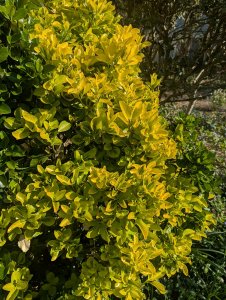
In the broad leaf evergreen category, golden euonymus (Euonymus japonica ‘Aureo Marginatus’ shines with light green leaves generously edged in gold.  The color is most radiant in the spring. The tough, resilient plants grow about five to eight feet tall and four to eight feet wide at maturity, thriving in part shade.

Gilded Annuals

Add in extra golden color with annual foliage plants like coleus.  New varieties come on the market every year, many with either chartreuse leaves or multi-colored foliage that includes shades of yellow and yellow green. Among the best gold-leafed varieties is Color Blaze® Mini Me™ ‘Chartreuse’, with finely dissected foliage and great golden-green color.  Coleus ‘Main Street Chartres Street’ has similar coloration.

Caladiums are another great choice for instant summer color.  Many of the plants bear leaves that sing out in mixtures of green, cream, red, pink, and white, but a few also feature golden-green foliage.  One of them, ‘Limelite’ sports lime green leaves lightly speckled in red.  It tops out at 12 to 18 inches tall and works well in pots or beds.  ‘Mint Julep’ is primarily light green, with a pink central blush and darker pink veins.  Caladiums love shade and hot weather and should be watered when the soil around them feels dry.

Golden Rules

Mulch is essential for moisture loving gold-leafed varieties, and most benefit from organic soil amendments, like Fafard® Premium Natural and Organic Compost at planting time.  Too much sun may burn these beauties, so make sure to site them at least light shade. Treat your gold-leafed plants right and your garden will look as if you have the Midas touch.

About Elisabeth Ginsburg

Born into a gardening family, Elisabeth Ginsburg grew her first plants as a young child. Her hands-on experiences range from container gardening on a Missouri balcony to mixed borders in the New Jersey suburbs and vacation gardening in Central New York State. She has studied horticulture at the New York Botanical Garden and elsewhere and has also written about gardens, landscape history and ecology for years in traditional and online publications including The New York Times Sunday “Cuttings” column, the Times Regional Weeklies, Horticulture, Garden Design, Flower & Garden, The Christian Science Monitor and many others. Her “Gardener’s Apprentice” weekly column appears in papers belonging to the Worrall chain of suburban northern and central New Jersey weekly newspapers and online at http://www.gardenersapprentice.com. She and her feline “garden supervisors” live in northern New Jersey.


KOREAN SPICE VIBURNUM by Elisabeth Ginsburg

KOREAN SPICE VIBURNUM

A Star in Spring

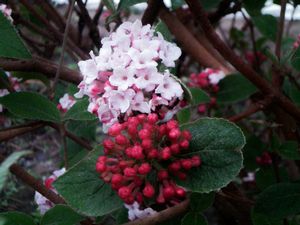
In spring sweet fragrance is everywhere—wafting softly from daffodils and issuing assertively from hyacinths. The great spring fragrance drama peaks with lilacs, but even before that, Korean spice viburnum (Viburnum carlesii) steps up with an absolutely intoxicating aroma.

Growing between four and six feet tall and wide at maturity, this useful deciduous shrub is part of the large viburnum genus, which is home to about 150 species.  Many of them are great garden plants, but, as English botanist Martin Rix says in The Botanical Garden, “the spring-flowering Viburnum carlesii and its hybrids are among the best-scented of all shrubs.”

Fragrant Globes

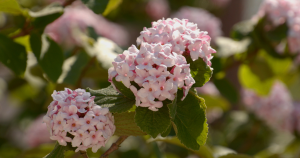
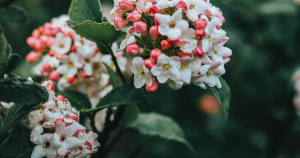
All that fragrance happens in late March or early April, depending on location and climate conditions.  Small globes (three inches wide) composed of scores of rose-pink buds appear first, and if you sniff them, your nose will register just a hint of the sweetness to come.  The buds open into round, white flowerheads composed of scores of individual blooms.  The flowerheads look like small snowballs and exude strong perfume, especially when the sun is shining, and temperatures are warm.  As with hyacinths, the fragrance is strong enough that a single “snowball” in a vase will scent a small room.

Once the flowering show is over, the shrub assumes its pleasant supporting role in the garden, sporting large green, toothed leaves.  Eventually red drupes or berries form, changing to black as they age.  In the fall, the leaves turn red before leaving the scene for winter.

The main reason to buy a Korean spice viburnum is the spring scent–but it is reason enough.


A Victorian Favorite    

Viburnum carlesii was named for an Englishman, William Carles, a member of the British Consular Service and amateur plant collector in the late nineteenth century.   Maggie Campbell Culver, in her wonderful book, The Origin of Plants, mentions that Carles collected plants in Korea in 1883-1885, which is when he must have obtained the plant that was named in his honor.  The species was first described by English botanist William Botting Hemsley, who had a long career at the Royal Botanic Garden at Kew, ending up as Keeper of the Herbarium and Library

Anything that smells as good as this viburnum was bound to catch on fast.  By 1907, Viburnum carlesii was so popular that its portrait appeared in the well-respected Curtis’s Botanical Magazine.  If it had not made its way to the United States by that time, it was soon to do so.  A 1947 edition of the Wayside Gardens catalog refers to the shrub as “a great favorite.”

Spicy Choices

If you are looking for a Korean spice viburnum, the list of choices is large.  All offer the fragrant spring flower globes and many boast good fall color.  Varieties like ‘Sugar-n-Spice’ and ‘Spice Girl’ grow six to seven feet tall and almost equally wide.  For something a bit smaller and more compact, try ‘Spice Baby’, which tops out at three to five feet tall, or ‘Spice Island’, which has a mounding habit and grows to four or five feet.  Little ‘Compactum’ is smaller still at three to four feet tall and wide.  While most Korean spice viburnums are hardy in USDA Zones 5-8, ‘Spice Island’ is more heat tolerant and hardy through Zone 9.

For larger gardens, ‘Mohawk’, a hybrid cross between Viburnum carlesii and Viburnum burkwoodii, offers the addition of glossy foliage and good fall color on bushes that grow six to eight feet tall.  Another hybrid, ‘Cayuga’, can soar to 10 feet.

The smaller varieties will grow successfully in containers, provided that the pots are at least 24 inches in diameter with excellent drainage.

An Easy Grower

The old Wayside catalog’s  cultural information is still good today: “Hardy, easily grown and does well in light shade, as well as in full sun.”  When planning a planting site, be sure to factor in the mature height and width of the specific viburnum variety.  Plant in spring or fall in well-drained soil amended with a high-quality product like Fafard ® Garden Manure Blend. Water regularly to get the shrub established.  Once the plants have set roots they are relatively drought tolerant.

If your shrub needs to be pruning to shape, do so after it blooms.

Pollinators’ Delight

It is no surprise the Korean spice viburnum attracts butterflies and other pollinating insects as readily as it attracts human admirers. The black fruits will feed birds and small animals in the fall and early winter.  The shrubs can be used as hedges, or as the focal points of pollinator gardens.  Containerized specimens can also anchor large-scale container arrays.

After a long winter, most of us are tired of indoor odors like wet wool or damp dog.  Korean spice viburnum is the perfect olfactory refresher.

About Elisabeth Ginsburg

Born into a gardening family, Elisabeth Ginsburg grew her first plants as a young child. Her hands-on experiences range from container gardening on a Missouri balcony to mixed borders in the New Jersey suburbs and vacation gardening in Central New York State. She has studied horticulture at the New York Botanical Garden and elsewhere and has also written about gardens, landscape history and ecology for years in traditional and online publications including The New York Times Sunday “Cuttings” column, the Times Regional Weeklies, Horticulture, Garden Design, Flower & Garden, The Christian Science Monitor and many others. Her “Gardener’s Apprentice” weekly column appears in papers belonging to the Worrall chain of suburban northern and central New Jersey weekly newspapers and online at http://www.gardenersapprentice.com. She and her feline “garden supervisors” live in northern New Jersey.


NEWS FROM THE WORLD OF HELLEBORES by Elisabeth Ginsburg


NEWS FROM THE WORLD OF HELLEBORES

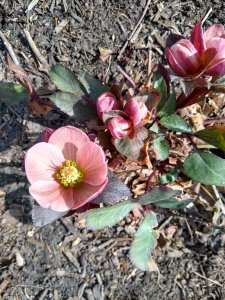
What did gardeners ever do without hellebores, those beacons of the late winter and early spring garden that are happy in light shade, mostly impervious to deer, and offer lovely, long-lasting flowers? Fortunately, none of us have to worry about that since breeders and merchandisers are turning out new varieties every season. The hardest part now is choosing the right ones for your location.

So, what’s new under the hellebore sun? Plenty. Even if you are a hellebore fanatic, it’s highly likely that you will run out of space before you run out of hellebores.

Uncommon Commonality—Helleborus orientalis

Hellebores are low-growing members of the buttercup or Ranunculaceae family. A number of species are commercially available, but the most popular by far is generally sold as Helleborus orientalis or Lenton Rose. That species originated in Turkey and the Caucasus regions, growing about 18 inches tall and wide, with large, palmate leaves and nodding flowers in shades ranging from white through pink-purple to true purple. In time the orientalis species was crossbred with a number of other hellebores to produce Helleborus x hybridus, which dominates the market today.

Because of that popularity, breeders all over the world have worked to improve hellebores, extending the color range, creating bigger, more outward-facing flowers, and showy double blooms. Every growing season brings new developments in the world of hellebores.

All that Glitters is Gold

One of the brightest developments in hellebore breeding is gold-flowered varieties, which were developed from crosses involving green-flowered Helleborus viridis and other species.

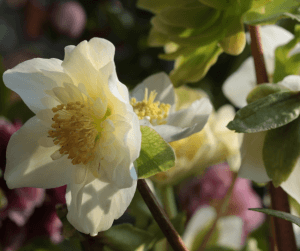
‘Searchlight’ bears single yellow petals in a shade of greenish yellow, while showy double-flowered varieties like ‘Golden Lotus’, shine in pale gold. Gold also figures strongly in bicolors like the double-flowered ‘Sun Flare’, which is part of the Winter Jewels® series of hellebores. ‘Sun Flare’ features medium yellow petals accented by red edges. ‘Sunshine Ruffles’ features a similar double configuration with yellow petals. The red edges are much narrower than those of ‘Sun Flare’.

Double the Fun

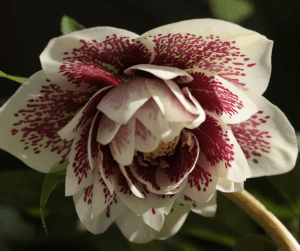
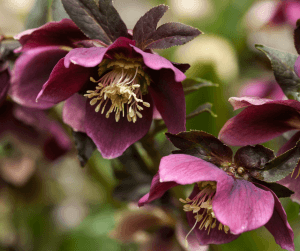
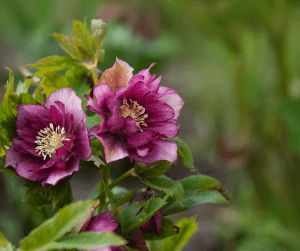
And speaking of doubles, the current hellebore passion for double flowers is reminiscent of the Oscar Wilde quote, “Nothing exceeds like excess.” ‘Midnight Ruffles’, which is ‘Sunshine Ruffles’ opposite number, arrays itself in large black blooms with a multitude of petals. The only hint of brightness is at the center of each flower, where golden stamens hold court. ‘Painted Jewels,’ another entry in the Winter Jewels® line, boasts white petals “painted” with dark red splotches. ‘Wedding Crasher’ is spectacular with a double number of pale pink petals liberally dotted with darker red.

The double-flowered hellebores, which bloom at the same times as their single-flowered counterparts do not seem any less vigorous and certainly make a splash at a time when most flowers have not even made an entrance.

Facing Up to It

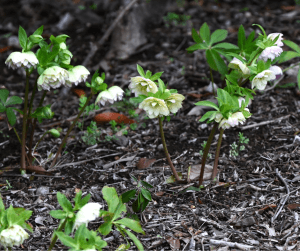
One of the holy grails in hellebore breeding has long been upward facing flowers. The downward or nodding posture of many hellebore species’ flowers was an adaptation that protected the flowers’ reproductive organs from frosts. However, even the most resolute hellebore admirers do not like getting down on all fours to appreciate the flowers. Most of the Helleborus x hybridus varieties and strains still nod in the spring breezes, but some of their

relatives, bred from a combination of species, sometimes including Helleborus niger, the “Christmas rose,” have blooms that if not upward-facing, at least turn outward towards the viewer. German hybrids, like ‘HGC® Diva’ couple white flowers, sometimes with a pinkish or greenish tinge with the outward-facing trait. For something in a darker shade, ‘HGC® Merlot’, with red wine-colored flowers and dark stems, fills the bill.

Foliage Interest

While hellebores put on a big show in the spring, some gardeners look for plants with added interest. Hellebore breeders have come up with varieties with variegated foliage, like ‘Ivory Prince’, which is known botanically as Helleborus x nigerericsmithii and toothed leaves veined in white, in addition to its ivory flowers. HGC ‘Pink Frost’ features similar leaves and dusty pink blooms. Since variegation is popular, look for more variegated-leaf plants in the future.

Hellebore Care

Whether your hellebore has yellow flowers, upward-facing blooms or variegated leaves, it needs good care to thrive. Plant in a sunny or lightly shaded location with rich soil. Amend that soil at planting time with a high-quality amendment, like Fafard® Premium Natural and Organic Compost, and water young plants regularly. Hellebores are seldom troubled by critters and, if happy, will increase in size. Be warned, a young plant may only have a few flowers in the first year but will hit its stride in years two and three.

Some self-seeding may also happen, and if you are trying to fill a large area, this may be a welcome event. However, since named varieties are produced from hand-pollinated and carefully selected parent plants, the seedlings in your garden will most likely not have the same traits as the parents.

About Elisabeth Ginsburg

Born into a gardening family, Elisabeth Ginsburg grew her first plants as a young child. Her hands-on experiences range from container gardening on a Missouri balcony to mixed borders in the New Jersey suburbs and vacation gardening in Central New York State. She has studied horticulture at the New York Botanical Garden and elsewhere and has also written about gardens, landscape history and ecology for years in traditional and online publications including The New York Times Sunday “Cuttings” column, the Times Regional Weeklies, Horticulture, Garden Design, Flower & Garden, The Christian Science Monitor and many others. Her “Gardener’s Apprentice” weekly column appears in papers belonging to the Worrall chain of suburban northern and central New Jersey weekly newspapers and online at http://www.gardenersapprentice.com. She and her feline “garden supervisors” live in northern New Jersey.

Trends for the New Gardening: What’s New in the Nurseries by Elisabeth Ginsburg

Totally On-Trend

If you wanted to create the most on-trend garden for the new gardening season, what would it look like?  Leafing through shelter magazines, garden catalogs, websites, and other communications outlets, it would appear that a totally on-trend garden might exist in either in-ground or container form and contain a wide array of drought-tolerant annuals, perennials, and shrubs with jewel-toned flowers and the ability to attract an abundant number of pollinators.  Extra trend points would go to those landscapes featuring native plant varieties with excellent resistance to extreme weather. For gardener’s living in areas prone to wildfires, all of the above would happen in the context of fire-awareness, with vegetation-free shelter belts around houses and other structures.

Pollinators’ Heaven

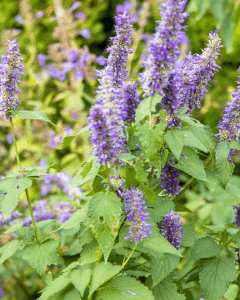
While many garden merchandisers are offering pre-selected pollinator gardens, it is fun to pick individual varieties on your own.  Members of the mint family are much loved by butterflies, moths and other insects, and in the last few years, hummingbird mint or agastache has ridden a wave of popularity.  Many are drought tolerant as well.  New agastaches this year include colorful additions to the Maestro® Agastache series like ‘Gold’ and ‘Coral’.  Catmint, a stalwart of easy-care perennial landscapes, is newly available in a gold-leafed variety, ‘Lemon Purrfection’.

Hydrangeas Hold Court

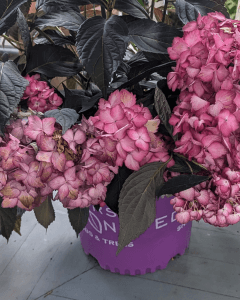
The enduring popularity of hydrangeas, especially new varieties that bloom on both new and old wood, is on display in this season’s new offerings.  Rich color dominates in offerings like the red-flowered hydrangeas, with Hydrangea macrophylla Seaside Serenade® Hanalei Bay and Centennial Ruby™ leading the way.  Smaller hydrangea offerings, suitable for small landscapes and even large containers abound, with varieties like compact ‘Lil Annie’ oakleaf hydrangea leading the way

Coneflowers in Every Color

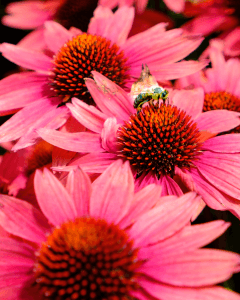
If coneflowers (echinacea) are not in every single garden, container and window box in America and elsewhere, it is not for lack of variety. Echinacea has been hotter than hot for more than a decade and the heat persists.  New bi-colors, like ‘White Tips’, with lavender petals edged in bright white, increase the color possibilities, while double-flowered ‘Raspberry Ripple’ adds yet another entry in the fluffy flower category. The trend for unusual petal configurations—quilled, spoon-shaped, or spidery—has resulted in echinaceas like ‘Prima Spider’, a bi-colored variety with slender spoon-shaped petals.

Cavalcade of Dashing Annuals

Breeders and merchandisers are working hard to keep up with the demand for ever more colorful annual bedding plants.  New entries into the annual array include ever brighter shades of impatiens, petunias (and their relatives the “million bells” or calibrachoa) in single and double varieties, some with extravagant stripes. Unusually colored petunias like Amazonas™ ‘Plum Cockatoo’ change the garden color scene with pale green petals swirling around purple centers.  Not to be outdone, new members of the Queeny series of lushly petalled and colored Zinnia elegans varieties includes opulent double-flowered entries like ‘Queeny Red Lime’, a bi-color with rose pink outer petals surrounding shorter, lighter inner petals. Other unusual colors include ‘Queeny Lemon Peach’ and ‘Queeny Orange’.

For color in shade, gardeners have long turned to the flashy foliage of annual coleus.  This year’s newcomers include ‘Pink Ribbons’, with toothed, near-black leaves edged and veined in bright pink.

Dahlia Resurgence—Hang Onto Your Tubers

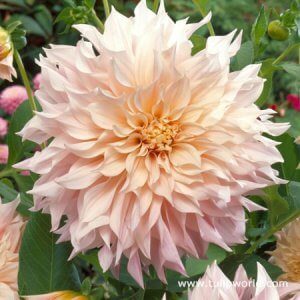
Once reviled as common and kitschy, dahlias now take center stage everywhere, with lots of new entries for spring 2026.  One old reliable vendor lists no fewer than 16 online pages of new varieties.  New and noteworthy entries in the dahlia sweepstakes include the fluffy, exuberantly striped ‘Knight’s Armour’ and the demure ‘Halo’.  Popular introductions routinely sell out, so if growing dahlias from tubers is your thing, order now.

Houseplant Riot

For apartment dwellers and those lacking outdoor space, garden merchandisers say, “no problem”, and back that up with an amazing area of houseplants (which can be moved outside, space and climate permitting).  The world of fancy-leaf begonias has expanded with new entries including ‘Joy’s Jubilee’, an exuberant swirl of ruffled green and maroon leaves, dappled in white.  Foliage plants—restful and otherwise—are also very popular, especially in large sizes, with new introductions like the elephant-eared Alocasia ‘Variegated Freydek’, flaunting its huge green and white leaves, or white variegated monstera, with its artfully tattered foliage.  Old-fashioned parlor maples (Abutilon) have shed their Victorian image and reappeared in new forms, like ‘Red Glory’, with scarlet hollyhock-like flowers, and the pink and white ‘Wedding Day’, which celebrates its name with nodding blooms.

Drought Tolerant

With drought conditions a regular occurrence in some parts of the country, gardeners are looking for deep-rooted prairie plants like goldenrods and penstemons that need little hydration once they are established.  Where climate permits, or indoor winter quarters exist, agaves are very much in vogue, with new introductions like the variegated ‘Craziness’ or the gold and green striped ‘American Masterpiece’, an agave/mangave hybrid.

Newcomers Welcome

Garden vendors are especially interested in attracting new gardeners to the hobby.  For them, the merchants have created an increasingly wide array of pre-planned gardens, sold complete with plants and planting diagrams.  Container gardeners are not left out of this trend, and companies with provide plants, diagrams or pictures, and selected containers, making plant selection and arrangement easy and accessible.  The packages may or may not include the newest or most fashionable plants, but they are designed to encourage the novices who will buy the new introductions of the future.

About Elisabeth Ginsburg

Born into a gardening family, Elisabeth Ginsburg grew her first plants as a young child. Her hands-on experiences range from container gardening on a Missouri balcony to mixed borders in the New Jersey suburbs and vacation gardening in Central New York State. She has studied horticulture at the New York Botanical Garden and elsewhere and has also written about gardens, landscape history and ecology for years in traditional and online publications including The New York Times Sunday “Cuttings” column, the Times Regional Weeklies, Horticulture, Garden Design, Flower & Garden, The Christian Science Monitor and many others. Her “Gardener’s Apprentice” weekly column appears in papers belonging to the Worrall chain of suburban northern and central New Jersey weekly newspapers and online at http://www.gardenersapprentice.com. She and her feline “garden supervisors” live in northern New Jersey.

Barking up a Tree: Tree Bark that Shines in Winter by Elisabeth Ginsburg

When you look at trees during the growing season, you see leaves and sometimes flowers or fruit.  Winter offers a different perspective.  With the leaves absent, many deciduous trees offer a lovely extra—interesting bark that provides a fourth season of interest.  It is something to think about when you are creating or adding to a landscape.

Taking a Shine

Birchbark cherry (Prunus serrula), also sometimes known as “redbark cherry,” is a small ornamental tree (20 to 30 feet tall and wide) that is rightly celebrated for its ethereal white spring blossoms.  Those blooms are followed during the growing season by slender, toothed leaves. In winter, the trees become Cinderellas, undergoing a seasonal exfoliation, or shedding of the old outer bark layer.  The young bark underneath is lustrous enough to appear polished and reddish brown like mahogany.

Birchbark cherry enjoys the same conditions as other ornamental cherry trees, preferring full sun to light shade and well-drained soil.

Snakes Alive

Snakebark maple (Acer pennsylvanicum) is a North American native tree that goes by many common names, including whistlewood, striped maple, goosefoot maple and moosewood.  The young bark is unique in its green and white vertical stripes, which in an earlier time reminded some people of snakeskin.  Perfect for smaller gardens, snakebark maple grows 15 to 25 feet tall, with a nearly equal spread, and can also be grown as a large shrub.  Like many maples, the snakebark variety features lobed leaves, with each leaf sporting a trio of lobes.  This probably gave rise to the “goosefoot” nickname.  Yellow fall foliage makes snakebark maple a year-round attraction in partly shaded conditions with consistent moisture.

Thinking Pink

Japanese maples (Acer palmatum) are widely loved for their landscape versatility, offering sculptural shapes, deeply dissected leaves, and attractive fall colors.  The ‘Sango-kaku’ or coralbark variety adds another dimension to Japanese maple allure, with winter bark that is pale pink to rosy red on young branches and stems.  Growing 20 to 25 feet tall and slightly less wide, the trees are remarkably tolerant of heavy soil and can even survive in proximity of toxic black walnut trees. Small clusters of red-purple flowers appear in spring, followed by leaves with five or seven slender lobes apiece.  As a prelude to that rosy winter show of bark, the leaves turn shades of yellow and reddish bronze in the fall, prior to their winter departure.

Like many Japanese maples, the coralbark variety is an understory tree, happiest in dappled shade.

Exfoliation Station

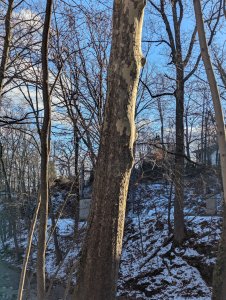
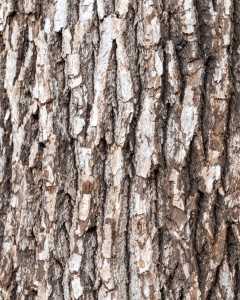
The American sycamore is a majestic tree, sometimes growing as large as 75 to 100 feet tall and wide—perfect for parks and other large spaces.  In earlier generations, when urban and suburban streets were narrower, and the spaces between sidewalks and streets were wider, sycamores were also sometimes used as street trees. Known botanically as Platanus occidentalis, sycamores are another species with a high tolerance for a variety of soil conditions, as well as urban and suburban pollution.  In the summer, these statuesque beauties boast large, lobed leaves.  The brown bark of the sycamore exfoliates in patches to reveal stark white bark underneath.  This feature gives the trees a distinctive camouflage-like appearance, making them recognizable even from a distance.  Older trees, with an abundance of white bark, look almost ghostly on foggy or rainy days.

Sometimes sycamores are called “buttonwood” or “buttonball” trees because their fruiting structures are clusters of seeds that when ripe leave the trees as down-covered tufts.  Preferring full sun, sycamores can also tolerate light shade.

A Camellia-Like Chamaeleon

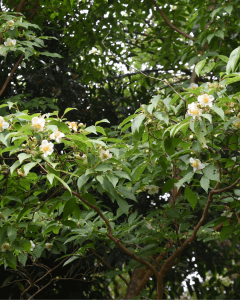
Japanese stewartia (Stewartia pseudocamellia) is a member of the tea family, with features reminiscent of its relative, the true camellia.  Growing 20 to 40 feet tall and 15 to 30 feet wide, the trees can be kept to reasonable size with pruning after flowering.  A true four-season plant, Japanese stewartia covers itself with white, camellia-like flowers in late summer, at a time when most flowering trees have finished the floral floorshow.  The flowers are made more distinctive by the prominent golden orange anthers in the center of each one.  Fall finds the trees coloring up with leaves turning shades of orange, red, and gold.  Once the leaves are gone, it is easy to see the distinctive bark.  Like the sycamore, stewartia exfoliates, revealing multi-colored patches of young bark that may be pale gray or brown, peachy-taupe or a tawnier orange-brown shade.  It is camouflage, but extremely interesting camouflage.

Stewartia is another understory tree, thriving in partial shade.  It demands consistent moisture, but the rewards are stunning year-round.

Covered in all the Papers

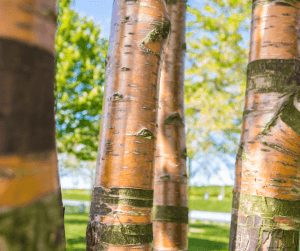
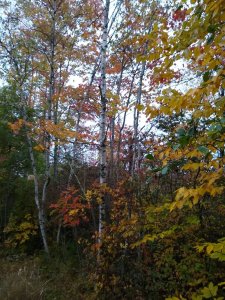
North American native paper birch or Betula papyrifera, is a shade and moisture-loving tree that thrives in cooler climates.  Used by Native Americans to fashion birchbark canoes, the trees can grow 50 to 75 feet tall, with a width of 25 to 50 feet, but often do not reach those dimensions in suburban landscapes.  Showy male and female catkins appear on the trees in spring, and the female catkins eventually give way to cone-like fruiting structures.  Paper birches may develop into specimens with a single trunk, or several slightly thinner ones.  The most distinctive feature of any paper birch is the stark white bark, which peels away from the trees in curling, papery strips revealing tawny brown underbark.  The bark on older birches may show dark horizontal striations as well.

Plant to Last

Planting trees with interesting winter bark is a good landscape investment.  To get the best return on that investment, choose the right site and make sure that you consider the tree’s mature size before it goes into the ground.  Amend the soil in the planting hole with a good compost mix, like Fafard® Premium Natural and Organic Compost, and mulch, donut-fashion around the base of the new tree.  Water regularly until the roots become established, as well as later in times when there is little rain.  Add the peeled bark fragments from exfoliating species to the mulch to save on clean-up.

About Elisabeth Ginsburg

Born into a gardening family, Elisabeth Ginsburg grew her first plants as a young child. Her hands-on experiences range from container gardening on a Missouri balcony to mixed borders in the New Jersey suburbs and vacation gardening in Central New York State. She has studied horticulture at the New York Botanical Garden and elsewhere and has also written about gardens, landscape history and ecology for years in traditional and online publications including The New York Times Sunday “Cuttings” column, the Times Regional Weeklies, Horticulture, Garden Design, Flower & Garden, The Christian Science Monitor and many others. Her “Gardener’s Apprentice” weekly column appears in papers belonging to the Worrall chain of suburban northern and central New Jersey weekly newspapers and online at http://www.gardenersapprentice.com. She and her feline “garden supervisors” live in northern New Jersey.


Winter Bloom Jasmine by Elisabeth Ginsburg

In cold weather climates, winter can be long, dark and depressing—especially after the holidays.  Gardeners can find temporary cheer in houseplants and garden catalogs, but the joy that comes from a landscape full of color and life is largely missing.

An Antidote to Depressing Winter Days

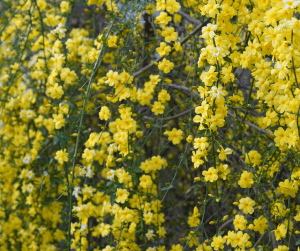
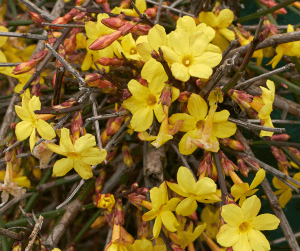
That’s where winter flowering jasmine (Jasminum nudiflorum) comes in.  Blooming in January, February or March, depending on location and weather, winter-flowering jasmine offers some of the first signs of the coming season.

Only a few jasmine species can survive outdoors in cold winter climates, and winter flowering jasmine is one of them.  Its yellow flowers are reminiscent of forsythia, and probably tempt any pollinators brave enough to be out and about in uncertain late winter weather.  The “jasmine” name suggests fragrance, and, in that respect, Jasminum nudiflorum is disappointing, as the blooms have no scent.

Expansion Guaranteed

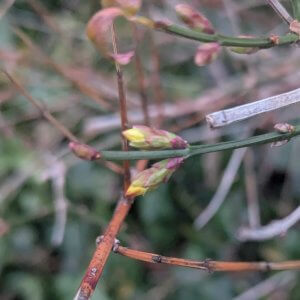
Native to northern China, the plants can be expansive, growing 10 to 15 feet tall and spreading three to six feet.  The height indication is a little misleading, unless you train your winter jasmine up a pillar, trellis or other support.  Left to their own devices, the long, bright green stems arch, sprawl and trail out from the central crown, sporting flowers along the way.

Nude but Not Naked

The “nudiflorum’ part of the name sounds a little risqué—like something out of The Real Housewives of Atlanta–but all it really means is that the plant’s growth habit dictates that the flowers appear before the small, green leaves.  Those leaves are “trifoliate”, or in clusters of three.

Free Rooting

No plant is perfect, and winter blooming jasmine is no exception.  The long arching stems tend to root whenever they touch the soil, which can lead to tangled thickets if the plants are not disciplined or trained upwards.  If you do that training and a few wayward stems find their way to the soil anyway, it is fairly easy to root them out.  You can also simply detach the stem from the parent plant, dig up the rooted cutting carefully, pot it up and give it to a friend or neighbor.

A Thrilling Spiller

In addition to being a great vertical specimen, Jasminum nudiflorum can be trained to spill over a wall or used as a ground cover, especially on a sloping site.  While the plants prefer sunny locations with rich, well-drained soil, they will tolerate light shade with only a slight reduction in flowering.

Trim and Tidy

Plant breeders have not had their way with winter flowering jasmine, so the species is the only option.  If you want to keep plants small, or have limited space, trim the stalks by two-thirds right after flowering.  Your jasmine will still produce leaves, but the plant will be tidier and better disciplined.

If you plant a winter flowering jasmine in sight of neighbors or passers-by, they will always say, “Is that a forsythia?”  The appropriate reply is, “No, this is something even more special.”

It spread all over the place, rooting wherever its many tangled branches touch down, and frequently making a nuisance of itself in my landscape.  I finally transplanted one of the offspring of my original plant to a protected place in the back garden and wound its long shoots around a support.  When February comes, the blooming shoots will be closer to my nose and the rambunctious canes will be farther from the ground.

About Elisabeth Ginsburg

Born into a gardening family, Elisabeth Ginsburg grew her first plants as a young child. Her hands-on experiences range from container gardening on a Missouri balcony to mixed borders in the New Jersey suburbs and vacation gardening in Central New York State. She has studied horticulture at the New York Botanical Garden and elsewhere and has also written about gardens, landscape history and ecology for years in traditional and online publications including The New York Times Sunday “Cuttings” column, the Times Regional Weeklies, Horticulture, Garden Design, Flower & Garden, The Christian Science Monitor and many others. Her “Gardener’s Apprentice” weekly column appears in papers belonging to the Worrall chain of suburban northern and central New Jersey weekly newspapers and online at http://www.gardenersapprentice.com. She and her feline “garden supervisors” live in northern New Jersey.


Camellias for Fall by Elisabeth Ginsburg

CAMELLIAS FOR FALL

I live in a cold winter area, so most of the camellias that I have seen and coveted have been lodged in the comfortable confines of the giant glass conservatories of botanical institutions.  The large, evergreen shrubs—generally varieties and hybrids of the Japanese camellia (Camellia japonica) bloom in mid to late winter, covering themselves with a glorious profusion of white, pink, rose, red and bi-colored blooms.  Many of those flowers look a little like roses but have little to no scent.  The beauty of the blooms more than compensations for that.

Yuletide Camellias

Sasanqua camellias have all the desirable traits of the genus with the added attraction of a different bloom time.  Bursting into flower in the fall and early winter, they put on a colorful show long before their camellia relatives.  This makes them catnip to gardeners, prolonging the camellia season and easing the wait for the Camellia japonica varieties.

The unique bloom time also gave rise to the species’ nickname, “Yuletide camellia”.  As with the similarly named “Christmas rose” (Helleborus niger), the sasanqua’s blooms may not appear on December 25, but will open any time from Halloween through the winter holidays.

Roots in Japan, Flowers Around the World

The sasanqua camellia was introduced to the western world from Japan in 1811 and caught on quickly in parts of North America that lie in USDA plant hardiness Zones 7-9.  Those climate restrictions did not deter true camellia-philes from growing the shrubs outdoors in large pots that were overwintered under cover, or simply keeping them year-round in greenhouses or conservatories.  More recently, breeders have produced sasanqua hybrids that are more cold-hardy that the species.

Sasanqua vs. Japonica

Given that the two species bloom at different times, are there other ways that sasanquas differ from japonicas? Both are members of Theaceae or tea family, with glossy green leaves.  The average sasanqua is somewhat smaller than the average japonica, topping out at six to 10 feet tall compared to its relative’s maximum height of 10 to 15 feet.  The young stems are coated with fine hairs, which are not present on japonica varieties.  Many experts characterize sansanquas as being more relaxed and refined in appearance than the later blooming camellias.  The leaves are smaller and the growth habit more open, giving the plants an airy appearance.

Much-Loved Flowers

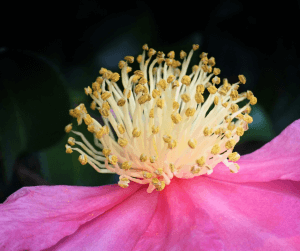
Species sasanqua flowers bear six to eight petals apiece and are up to three inches wide when fully open.  Those petals surround centers of golden stamens, making them doubly showy.  The petals may be crinkled like crepe paper, as in ‘Grey Ghost’, a silvery pink variety.  Single, double and semi-double varieties may boast romantic ruffled petal edges, like those of ‘October Magic® Carpet’.

Form and Substance

If you are hunting for a simpatico sasanqua, you can take your pick of flower forms, including plants with blossoms that are almost anemone or peony-like. Many bear Japanese names, in keeping with the long-established breeding efforts in the species’ country of origin. Extensive breeding has also taken place in the United States and elsewhere. ‘Yuletide’ is a true red variety, with a single row of petals surrounding bright gold stamens. Lovely, ruffly ‘Cecilia’ is a white-flowered double that is pink at its heart, with just the slightest hint of the same color on the petal edges. ‘Susie Dirr’, named after the daughter of woody plant guru, Dr. Michael Dirr, is an opulent, pink-flowered double with rounded petal edges.

Showy Leaves

I love the elegant, glossy foliage of the average Camellia sasanqua, but it you are in the market for additional garden interest, breeders have come up with plants that will meet your needs. ‘Golden Phoenix’ boasts pink and white single flowers, accompanied by dark green leaves edged in cream. ‘Royal Flush Shishi™’ features single rose-pink flowers and foliage variegated in shades of light and dark green.

Tolerating Cold

To increase cold-hardiness and other desirable traits, sasanquas are sometimes hybridized with other species, especially Camellia oleifera, native to parts of China, that is also noted for cold tolerance. Hybrids are easily identifiable by the “x” in the plant name, as in Camellia x ‘Winter Waterlily’.

What About Scent?

Not all sasanquas are fragrant, and some have only a faint fragrance, but a little research will yield some scented varieties, like white-flowered ‘French Vanilla’, and the anemone-flowered ‘Scented Snow’.

Happy Home, Happy Camellia

No matter which sasanqua you choose, treat it to the light shade that the species prefers, accommodating the roots with well-drained, acidic soil. If your soil leans towards the alkaline side, amend the planting soil with a product like Fafard ® Premium Natural and Organic Compost.  Consistent moisture is necessary, and mulch is helpful- as long as the mulch is applied doughnut-fashion and does not touch the camellia’s trunk. As with other flowering specimens, prune just after the flowers fade. Hard pruning will not traumatize a healthy camellia.
Sasanquas work equally well as single specimen plants or as flowering hedges. The hedge option is especially appealing, because it keeps the floral show going in the late fall, while upholding the tradition of evergreen hedging.


About Elisabeth Ginsburg

Born into a gardening family, Elisabeth Ginsburg grew her first plants as a young child. Her hands-on experiences range from container gardening on a Missouri balcony to mixed borders in the New Jersey suburbs and vacation gardening in Central New York State. She has studied horticulture at the New York Botanical Garden and elsewhere and has also written about gardens, landscape history and ecology for years in traditional and online publications including The New York Times Sunday “Cuttings” column, the Times Regional Weeklies, Horticulture, Garden Design, Flower & Garden, The Christian Science Monitor and many others. Her “Gardener’s Apprentice” weekly column appears in papers belonging to the Worrall chain of suburban northern and central New Jersey weekly newspapers and online at http://www.gardenersapprentice.com. She and her feline “garden supervisors” live in northern New Jersey.