
THE WORLD OF BLUE SALVIA
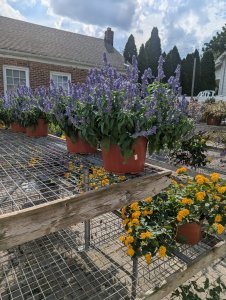
It is no exaggeration to say that the world is full of salvia. The genus is home to at least 900 annual, perennial and shrub species, native to many different parts of the globe. Hundreds of varieties and hybrids make the salvia universe even bigger. Some of the brightest stars in that universe bear blue flowers and a good number of them make excellent garden plants.
Just the Basics
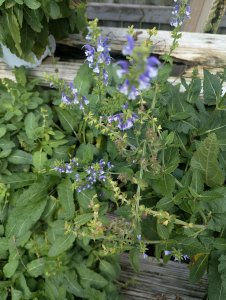
All salvias, sometimes known as sages, are members of the mint or labiatae family, easily recognizable by stems that are square in cross section and leaves that are opposed on the stems. The name “salvia” is derived from “salveo”, Latin for “to save” or “heal.” Some species have long been used for culinary or medicinal purposes. These days, gardeners may include culinary salvia in the herb garden and ornamental salvias in beds, borders or containers. Salvia flowerheads are typically mint-like with spikes of flowers in shades of blue, blue-purple, pink and white. Like other members of the mint family, most salvias bear blooms that are irresistible to butterflies and other pollinators and repellent to common garden varmints.
May Night
The best known “blue” salvia is ‘May Night’ (Salvia x sylvestris), also known by its original German varietal name, ‘Mainacht’. It is not true blue, but blue purple, with dark blue stems and dark purple bracts or petal like leaves. That combination adds up to flower spikes that look either more blue or more purple, depending on light and soil conditions. It is an old variety, bred in 1956, by renowned German plantsman, Karl Foerster. Still popular and easy to find today, it was named “Perennial Plant of the Year” in 1997 by the American Perennial Plant Association. Rising to about 30 inches tall, and growing in clumps almost equally wide, the flowers appear in spring, on stems adorned with aromatic gray-green foliage.
Blue-Flowered Species
‘May Night’ is the love child of two blue-purple-flowered salvia species, Salvia nemorosa or woodland sage and Salvia pratensis or meadow sage. Both have been used to produce other blue-flowered offspring. The blue salvia breeding picture has also included contributions from blue-flowered species, including mealycup sage (Salvia farinacea), azure blue sage (Salvia azurea), and bog sage (Salvia uliginosa). Some modern blue varieties are the result of generations of complex breeding efforts involving multiple species.
Best Sellers
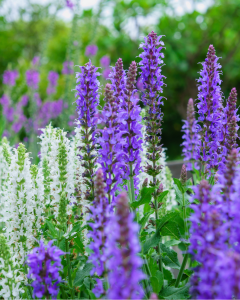
With the number of choices expanding regularly, how can you pick the best blue sage for your garden? The usual considerations, including USDA planting zone hardiness, sun exposure, garden or container size, water needs, individual aesthetics, and plant availability will determine your choice. To help sort the options, it’s a good idea to start with plants that are best sellers—readily available from a variety of sources, including brick-and-mortar stores, as well as online/catalog vendors.
Black and Blue
With electric blue flowers sprouting from black calices (Petal-like structures that protect the flower bud), Salvia guaranitica ‘Black and Blue’ is one of the most sought-after blue-flowered varieties. Winter hardy to USDA Zone 7a, it is a perennial that blooms throughout the growing season. Mature plants may be up to three feet tall and several feet wide, with stalks of one-inch long blue flowers that some have likened in appearance to snapdragons. Unfussy about soil, ‘Black and Blue’ prefers full sun or very light shade, and can tolerate some dry conditions. True to its nickname–anise-scented sage–the leaves are aromatic. In USDA Zone 7a, protect the plants with a winter mulch.
Sensational Blues
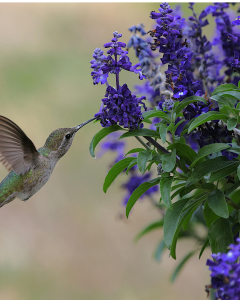
Plant marketers these days often promote varieties with common parentage or traits in themed series, and this is true in the salvia universe. One popular perennial series, bred from Salvia nemorosa or woodland sage and sold under the trademarked name “Sensation,” is segmented into groups of small, medium and larger varieties allowing gardeners to tailor selections to the available space. Sensation Compact ‘Sky Blue’, features pastel blue flowers, and Sensation Compact ‘Deep Blue’, boasts darker flowers that tend towards blue-purple. The Sensation Compact plants top out at about 10 to 12 inches. Sensation Medium ‘Blue’ and ‘Deep Blue’ are somewhat taller, growing up to 15 inches. The taller Sensation Special series is home to two bi-colored blue varieties.
Blue With Cold
Perennial salvia pratensis or meadow salvia is more cold tolerant than some other ornamental sages, and is hardy in USDA plant hardiness zones 3-8. Species plants and cultivated varieties are available. The Fashionista series, introduced by Walters Gardens, features blue meadow salvia varieties including ‘Evening Attire’ in dark blue-purple, ‘Midnight Model’, with slightly lighter blue petals and a mounding habit, and ‘Vanity Flair’, with sky blue blooms. Fashionistas are medium size plants, growing 18 to 24 inches tall and wide, suitable for either the garden or large containers.
Annual Blues
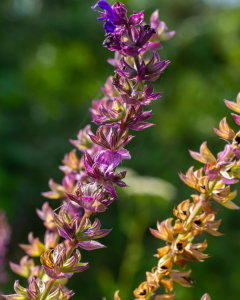
Many popular blue salvias are tender perennials that are generally grown as annuals in cold winter climates. They too are marketed in series. The trademarked Rockin series of guaranitica/farinacea hybrid plants features Rockin ‘Playin the Blues’, with the fragrant foliage that characterizes salvia, coupled with medium blue flowers and darker blue calices. Rockin varieties grow two to four feet high and two to three feet wide. For something a little smaller try ‘So Blue’, part of the Unplugged series of mealycup sage. ‘So Blue’ tops out at two feet tall, boasts a mounding habit and blooms regularly through the growing season.
Growing the Blues
Warmth and sunshine are best for most salvias, with some supplemental water needed during dry periods. Good drainage is a must, so amend the soil with a good product like Fafard Premium Natural and Organic Compost. Garden critters may turn up their noses at your beautiful blue salvia, but the same plants will inspire human garden visitors to sing the blues—in a good way.

About Elisabeth Ginsburg