

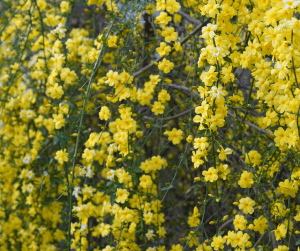
In cold weather climates, winter can be long, dark and depressing—especially after the holidays. Gardeners can find temporary cheer in houseplants and garden catalogs, but the joy that comes from a landscape full of color and life is largely missing.
An Antidote to Depressing Winter Days
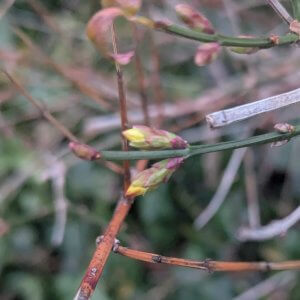
That’s where winter flowering jasmine (Jasminum nudiflorum) comes in. Blooming in January, February or March, depending on location and weather, winter-flowering jasmine offers some of the first signs of the coming season.
Only a few jasmine species can survive outdoors in cold winter climates, and winter flowering jasmine is one of them. Its yellow flowers are reminiscent of forsythia, and probably tempt any pollinators brave enough to be out and about in uncertain late winter weather. The “jasmine” name suggests fragrance, and, in that respect, Jasminum nudiflorum is disappointing, as the blooms have no scent.
Expansion Guaranteed
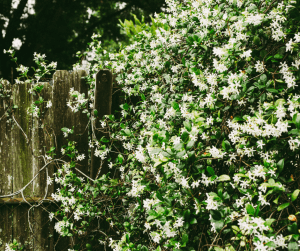
Native to northern China, the plants can be expansive, growing 10 to 15 feet tall and spreading three to six feet. The height indication is a little misleading, unless you train your winter jasmine up a pillar, trellis or other support. Left to their own devices, the long, bright green stems arch, sprawl and trail out from the central crown, sporting flowers along the way.
Nude but Not Naked
The “nudiflorum’ part of the name sounds a little risqué—like something out of The Real Housewives of Atlanta–but all it really means is that the plant’s growth habit dictates that the flowers appear before the small, green leaves. Those leaves are “trifoliate”, or in clusters of three.
Free Rooting
No plant is perfect, and winter blooming jasmine is no exception. The long arching stems tend to root whenever they touch the soil, which can lead to tangled thickets if the plants are not disciplined or trained upwards. If you do that training and a few wayward stems find their way to the soil anyway, it is fairly easy to root them out. You can also simply detach the stem from the parent plant, dig up the rooted cutting carefully, pot it up and give it to a friend or neighbor.
A Thrilling Spiller
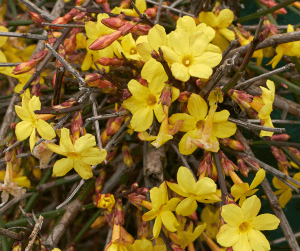
In addition to being a great vertical specimen, Jasminum nudiflorum can be trained to spill over a wall or used as a ground cover, especially on a sloping site. While the plants prefer sunny locations with rich, well-drained soil, they will tolerate light shade with only a slight reduction in flowering.
Trim and Tidy
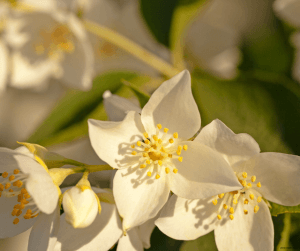
Plant breeders have not had their way with winter flowering jasmine, so the species is the only option. If you want to keep plants small, or have limited space, trim the stalks by two-thirds right after flowering. Your jasmine will still produce leaves, but the plant will be tidier and better disciplined.
If you plant a winter flowering jasmine in sight of neighbors or passers-by, they will always say, “Is that a forsythia?” The appropriate reply is, “No, this is something even more special.”
It spread all over the place, rooting wherever its many tangled branches touch down, and frequently making a nuisance of itself in my landscape. I finally transplanted one of the offspring of my original plant to a protected place in the back garden and wound its long shoots around a support. When February comes, the blooming shoots will be closer to my nose and the rambunctious canes will be farther from the ground.

About Elisabeth Ginsburg